Start here.
I have written here since 2010 on evangelization, parish life, Scripture, apologetics, and the moral life. These six are the best place to begin.
Go Home and Live as Missionary Disciples
If your faith feels humdrum, you may not have entered the mission yet. A talk to men on what that asks of you.
Formed By Distraction
Eliot described minds pulled from one distraction to the next. We now carry that in our pockets. What is it forming in us?
What Is a Catholic?
A plain answer: who belongs to the Church Christ founded on the Apostles, and what holds that Church together.
Why You Need Your Men’s Group
Before asking whether men’s groups work, ask what problem they are meant to solve.
Why Protestants Are Becoming Catholic at My Parish
What draws evangelicals and mainline Protestants into the Catholic Church, as they told me in class.
How God Speaks in Human Words
The first of four articles on how the Bible is at once a human book and the Word of God.
The Professional Church: discipline (part 3)
Whatever the character trait you are looking for in a new hire, there is one quality above all that must be present in abundance. This quality is more fundamental than self-motivation, has a great impact than candor, and gets better results than efficient org charts.
This quality is discipline.
In the world of the Church we see personal discipline as the foundation stone of Christian living. After all, the word "disciple" means "One who is disciplined". In the business world, disciplined thought, action, governance, planning, and disciplined resource management is the key to profit and success. As social sector workers, instead of private sector, profit is not a measure of what we would label "Success". But even so, discipline remains the fundamental characteristic of any great parish, school, diocese, or other Catholic organization.
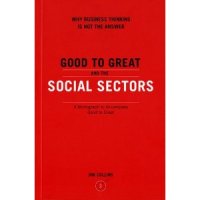 Quoting the influential Jim Collins:
"Mediocre companies rarely display the relentless culture of discipline - disciplined people who engage in disciplined thought and who take disciplined action - that we find in truly great companies. A culture of discipline is not a principle of business; it is a principle of greatness."
Collins wants to apply the main principles from his book Good to Great to the world of the non-profit, so he wrote a monograph called Good to Great for the Social Sectors. I draw from this small booklet because it addresses many of the problems faced in the parish.
A Topic for a Ph.D. Dissertation
 I am thinking about going for my Ph.D. in Catholic Studies. It is a 4 to 6 year process of research on a topic of my choosing that, once approved, I will work on every day for half a decade. All of this depends on employment opportunities, only one of which supplies enough income while allowing ample room for pursuing the degree.
I am most excited to write a dissertation, to focus on a narrow topic if interest and develop it into something new and creative. I was told that most doctoral dissertations are dull, and not to make too much out of it, but I do not care. To me, the work of research, reading, and writing are always exciting challenges, even if the outcome is 200 pages of yawn-fest for anyone other than me.
In deciding on a topic I wanted it to be something that I am passionate about, something that is crucial, that I struggle with personally, and that will keep me up at night seeking answers.
But the thought of writing about catechesis for 4-6 years is not all that appealing to me. Nope, I think I came up with another idea, something that has been bothering me since I was 14 and something that I am constantly seeking an answer to, and constantly running into self-doubts, intellectual brick walls, and a lot of current argumentation in Catholic circles.
I think I am going to write about the relationship between ethics and economics, focusing particularly on Catholic Social Teaching from the Popes, the Distributism fostered by the Chester-Belloc School, and the small-but-growing Austrian School of Economics.
CCE Syndrome
 In doing youth ministry over the years I have encountered two identifiable syndromes that have spread to varying degrees within my youth groups.
The first is "Catholic School Syndrome", which is a disease of the intellect that equates a living faith with a passing knowledge of the subject of Theology. God is reduced to a multiple choice answer on a test.
The second disease, one of the heart, is "CCE Syndrome", which affects the ability of public school kids to find any joy or excitement in their once-a-week faith formation program. CCE Syndrome prevents the teenage will from taking delight in the things of Heaven because they are immersed in the worst of the earth. CCE Syndrome is typically contracted through the lack of emphasis placed on a personal, living faith in God, replaced with a moldly monologue of religious instruction concerned with facts about God and Church history.
If the God of the Universe was madly in love with you, wouldn't that affect you somehow? It is a form of apathy, just like Catholic School Syndrome.
Here are some ways to smack it down.
moral short cuts and legislation
 Chesterton once accused the Puritans "Not of having too much morality, but too little." It seems to me that the neoPuritans, those secular busybodies that try to legislate their version of good and clean living, are stricken with the same malody.
It is not that they have a robust morality that provides vision, energy, and purpose to human life, but that they have a weak and feable structure, hardly capable of being principled, ordered, or systematic. In order to buttress up their little morality they attempt moral short cuts, the biggest of which is federal legislation.
Lobbying for laws against all things that they deem bad, unfit, or unhealthy, they seek to impose a grand appearance of their morality, but it becomes, like Bilbo Baggins so artfully said, "thin. Sort of stretched, like butter scrapped over too much bread." It is thin, and thus prone to distortions, corruptions, and ripple-effects that were unintended, but necessarily follow.
NeoPuritans try to take moral short cuts. They want the nation to be better, so instead of convincing every man, woman, and child to be better, they simply legislate away those things they believe are making our country worse. They think that national policy and law make people better versions of themselves because it saves them from themselves.