Start here.
I have written here since 2010 on evangelization, parish life, Scripture, apologetics, and the moral life. These six are the best place to begin.
Go Home and Live as Missionary Disciples
If your faith feels humdrum, you may not have entered the mission yet. A talk to men on what that asks of you.
Formed By Distraction
Eliot described minds pulled from one distraction to the next. We now carry that in our pockets. What is it forming in us?
What Is a Catholic?
A plain answer: who belongs to the Church Christ founded on the Apostles, and what holds that Church together.
Why You Need Your Men’s Group
Before asking whether men’s groups work, ask what problem they are meant to solve.
Why Protestants Are Becoming Catholic at My Parish
What draws evangelicals and mainline Protestants into the Catholic Church, as they told me in class.
How God Speaks in Human Words
The first of four articles on how the Bible is at once a human book and the Word of God.
Events, Talks and Discernment
 Jesus Christ is utterly humble, preaching his message by washing the disciples' feet. How humble are we, the preachers of his gospel?Whenever we give talks and lead conferences for youth we often approach it with programs centered around talks and framed by our own expectations. The danger lies in two things with this approach that must be re-evaluated in order to keep our talk, event or conference Christo-centric.
First, we all may think that discipleship lies in talking. Speech making is not the essence of living the Christian life. Listening to God in loving contemplation ought to be the center, not listening to me. There are two remedies for this from my perspective. For the speaker, all of our talks have to be drenched in prayer: from the topic, the placement, the outline, rough drafts and the final product to its opening and closing, as well as peppering the talk itself with the always-anointed words of Scripture. For the audience, especially teens, all of our talks have to lead them to better prayer, whether that is within the talk, as a challenge during the talk, or as meditative food-for-thought later on.
Traveling for Christ
It is central to a modern lay evangelist to be a traveling speaker, to board planes, trains and automobiles in order to reach whatever audience Christ sends our way.
 But I'm newly married and a new dad, so every time I have to head out to the airport for the weekend or a week, it is always painful. I love my family and my daughter is so new to the world that every day becomes a new experience for her, and loads of joy for Shannon and me, so I always feel like I'm missing out on her life.
Tonight I arrived in Kansas City, MO for the diocesan KC youth conference. It's going to be a lot of fun and I will have ample opportunity to be with young people and to preach Christ. My first time hosting a summer camp was for middle school teens in Rockyvine, MO. The teens that I got close to were Diane Pichert's kids from the old KC. They will be coming to this event as juniors and seniors in high school, and I am starting to feel old.
Systematic Catechesis and Evangelization
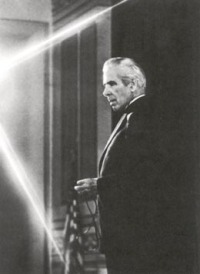 Fulton Sheen addressing the Knights of Columbus in 1975Jesus asks us to become great evangelists and disciple-makers, not just amazing keynote presenters. Archbishop Fulton J. Sheen once said that proclaiming the Christian life consisted of "First come then go." Only those who first come and sit at the feet of the Master again and again can be properly formed to "go, go" out into the world and not only preach the gospel, but to "go and make disciples".
When speaking about disciple-making, we need to cover the topic of systematic catechesis.
Systematic does not mean boring, mechanistic, or rote memorization. In fact, systematic catechesis demands creativity from every catechist as well as coherence.
So let's dive into the teaching of popes John Paul II and Paul VI on evangelization and catechesis is order to respond faithfully and take seriously the call to "go and make disciples" through being systematic in our catechesis.
Book Review: Hurt, by Chap Clark
 "The foreign and seemingly hostile world of adolescents."Chap Clark, associate professor of youth, family and culture at Fuller Theological Seminary, saw what few adults are ever privileged to see: the real subterranean world that teenagers today inhabit. In his book Hurt, which has challenged and changed youth workers all over the country, Chap Clark presents his case for understanding middle adolescents today. This is the best book for the intersection of sociology and ministry, and thought it's an academic book, it's written in a very accessible style.
This book is divided up into three parts, with appendices: Part I, The Changing Adolescent World; Part II, The Landscape of the World Beneath; and Part III, Where Do We Go from Here?. Appendix A directly applies the content of the book to the work of youth ministry and Appendix B explains the scholarly apparatus that framed his sociological research of midadolescence.
Chap Clark spent months working at a public high school as a substitute teacher and researcher. The students, faculty and administration all knew that he was gathering information and most cooperated. Through interviews, interactions and even surveys, Clark began to see what forms the foundation of current youth culture: systemic abandonment.